
1834 — 1892
Who Was
Charles Spurgeon?
Pastor, author, orphanage-founder, and prince of preachers — a life poured out in service of the gospel.

Charles Haddon Spurgeon
A Brief Introduction
The Boy Preacher
Charles Haddon Spurgeon was born on June 19, 1834, in Kelvedon, Essex, England. The eldest of seventeen children, he was raised in a deeply devout Nonconformist family. His grandfather, James Spurgeon, was a pastor, and Charles spent much of his childhood in his grandfather's manse, surrounded by Puritan theology and the life of the church.
Even as a boy, Spurgeon was a voracious reader. By age six he had read The Pilgrim's Progress and would go on to read it over a hundred times throughout his life. His remarkable intellect and spiritual sensitivity marked him from the earliest days.
A Snowy Conversion
On January 6, 1850, a fifteen-year-old Spurgeon was making his way to church when a blizzard forced him to seek shelter in a small Primitive Methodist chapel in Colchester. The scheduled preacher didn't show, and a lay minister stood to deliver a simple message from Isaiah 45:22: "Look unto me, and be ye saved, all the ends of the earth."
The man looked directly at the young Spurgeon and said, "Young man, you look very miserable... Look to Jesus Christ." That moment transformed Spurgeon's life forever. He later wrote, "I did look, and the cloud was gone, the darkness had rolled away, and that moment I saw the sun."

C.H. Spurgeon, photographed in London
C.H. Spurgeon, photographed in London
"I did look, and the cloud was gone, the darkness had rolled away, and that moment I saw the sun."
— Spurgeon, on his conversion
London's Pulpit Phenomenon
At just nineteen years of age, Spurgeon became pastor of the New Park Street Chapel in Southwark, London. Within months, the chapel's 1,200 seats proved insufficient, and the congregation moved to increasingly larger venues—including the Exeter Hall and the Surrey Music Hall—to accommodate the thousands who came to hear him preach.
In 1861, the Metropolitan Tabernacle opened with seating for 5,600. It remained filled Sunday after Sunday for the next thirty-one years. Spurgeon's sermons were transcribed weekly, selling 25,000 copies each, and were translated into dozens of languages. He became known as the "Prince of Preachers."
"To be a soul winner is the happiest thing in this world. And with every soul you bring to Jesus Christ, you seem to get a new heaven here upon earth."
— C.H. Spurgeon
More Than a Preacher
Spurgeon's ministry extended far beyond the pulpit. He founded the Pastors' College in 1856 to train ministers for effective, gospel-centered preaching. He established the Stockwell Orphanage in 1867, providing a home for hundreds of destitute children. He oversaw a colportage association that distributed Christian literature across England.
He authored over 135 books, including the beloved Morning and Evening devotional, The Treasury of David commentary on the Psalms, and Lectures to My Students, which remains a standard text in seminary education.
"It is not how much we have, but how much we enjoy, that makes happiness."
— C.H. Spurgeon
An Enduring Legacy
Spurgeon passed away on January 31, 1892, in Menton, France, at the age of fifty-seven. An estimated 100,000 people filed past his coffin, and sixty thousand lined the streets of London for his funeral procession. His Metropolitan Tabernacle Pulpit, comprising 63 volumes of sermons, constitutes the largest body of printed sermons in church history.
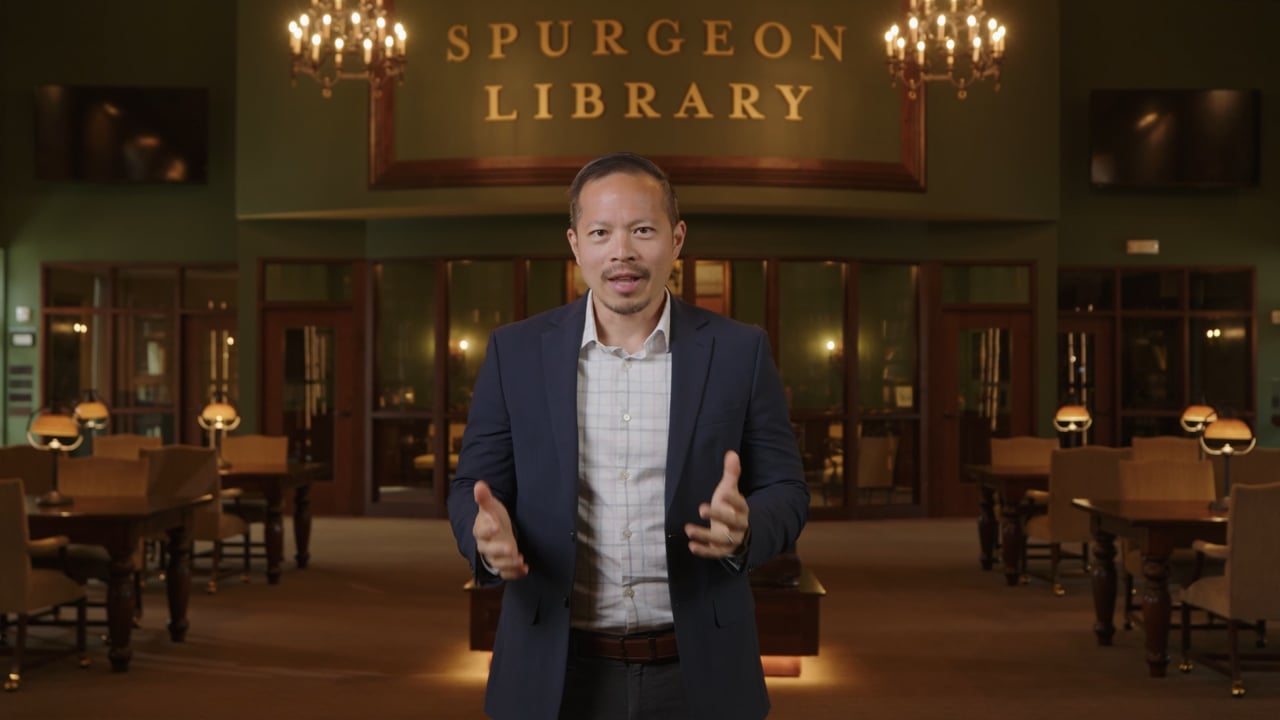
Today, his works continue to be read, preached, and studied around the world. The Spurgeon Library at Midwestern Baptist Theological Seminary houses nearly 6,000 volumes from his personal collection, preserving and making accessible the literary heritage of one of Christianity's most beloved voices.
Explore His Works
Search and read through thousands of sermons, articles, and books from the Prince of Preachers.
Search the LibraryA Life of Faithful Ministry
The Spurgeon Story
Born in Kelvedon, Essex
Charles Haddon Spurgeon was born on June 19, 1834, in Kelvedon, Essex, England, to a Nonconformist minister.
Stays with Grandparents
Spurgeon spent formative years with his grandfather, a Congregationalist pastor, deeply shaping his early faith.
Moves to Newmarket
Spurgeon moved to Newmarket to teach at a school, continuing his voracious reading and self-education in theology.
Conversion at Age 15
On a snowy January morning, a lay preacher's words on Isaiah 45:22 — "Look unto me, and be ye saved" — changed his life forever.
First Sermon Preached
At 16, Spurgeon preached his first sermon in a cottage at Teversham and quickly became known for his gifts.
Pastor at Waterbeach
At just 17, Spurgeon became pastor of the Waterbeach Baptist Chapel, transforming a small village congregation.
Called to New Park Street
At 19, Spurgeon was called to the historic New Park Street Chapel in London. Crowds quickly outgrew the building.
Surrey Gardens Music Hall
Services moved to the Surrey Gardens Music Hall, drawing over 10,000 — and marking a tragedy when a false alarm caused a stampede.
Preaches to 23,000
Spurgeon preached to an estimated 23,654 people at the Crystal Palace — one of the largest crowds ever addressed by a single voice.
Metropolitan Tabernacle Opens
The Metropolitan Tabernacle, seating 5,600, opened its doors and became the epicenter of his ministry for three decades.
Founding of Pastors' College
Spurgeon founded the Pastors' College to train men for ministry, equipping hundreds of pastors who spread across the globe.
Stockwell Orphanage Founded
Spurgeon opened the Stockwell Orphanage, eventually housing and educating over 500 children at a time.
Sword & Trowel Magazine
He launched The Sword and the Trowel, a monthly magazine sharing sermons, reviews, and ministry news.
Downgrade Controversy
Spurgeon withdrew from the Baptist Union over doctrinal compromise, a courageous stand that cost him many friendships.
Legacy Endures
Spurgeon passed into glory on January 31, 1892. He left 63 volumes of sermons, 135+ books, and a legacy shaping the church worldwide.